Text
Cadence by Tempo
Cadence allows people receiving social services to make decisions about their future and feel confident about the steps they can take to get there.


Cadence allows people receiving social services to make decisions about their future and feel confident about the steps they can take to get there.
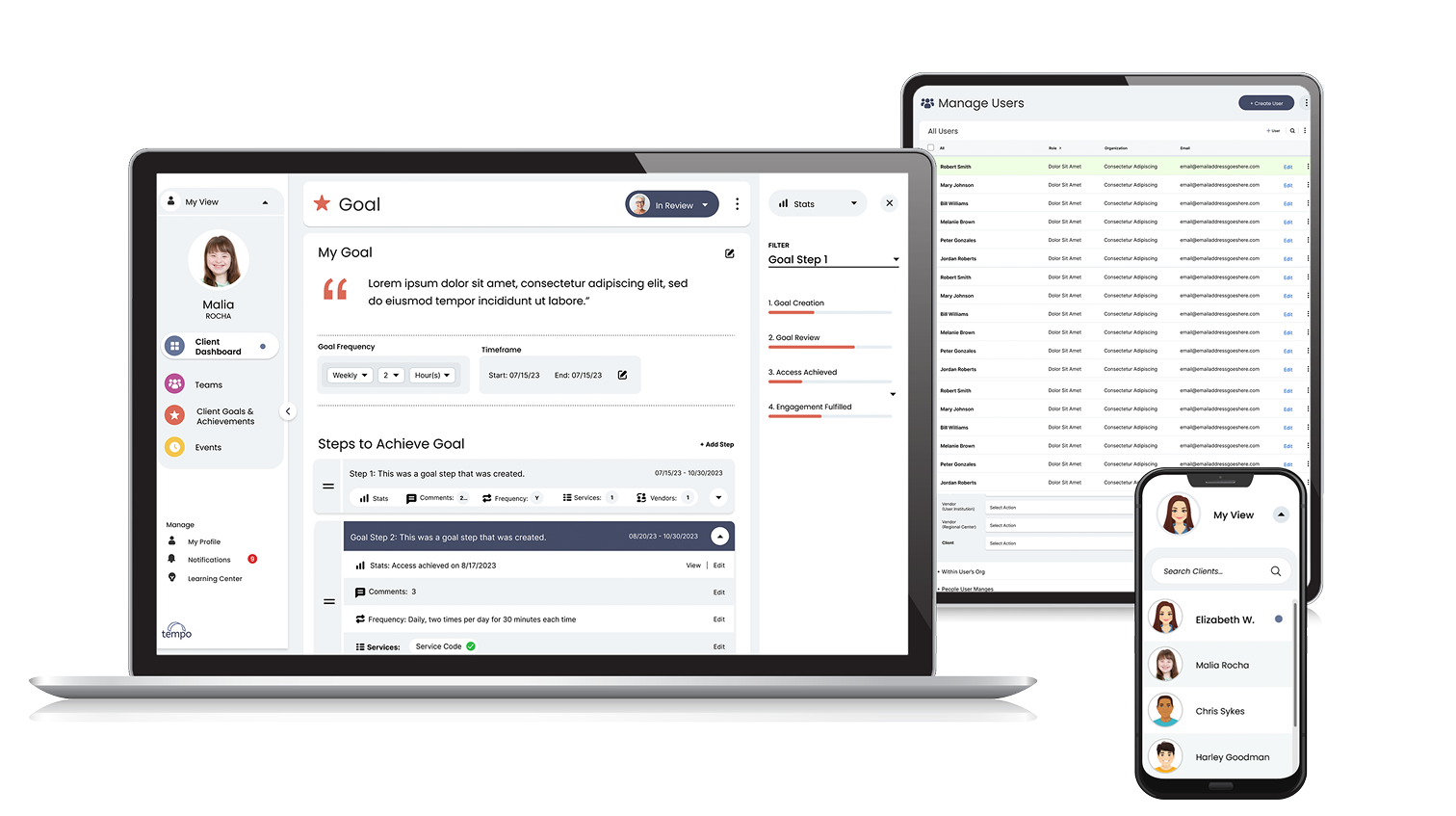
Big ideas come with big challenges. Tempo is a fast-moving startup with a noble vision: driving better outcomes for disabilities management. It’s a monumental task driven by deep humanity, blue-sky thinking, and a strong partnership to build a product, a service, a brand and a business!
Design-led, outcome-first product development
Marker Seven led Cadence from concept through launch, applying a research-grounded, iterative design process that kept three distinct user types — clients, case managers, and vendors — equally in view. Rather than building a system that served administrators and bolted on client access as an afterthought, we architected Cadence around the client experience and worked outward from there.
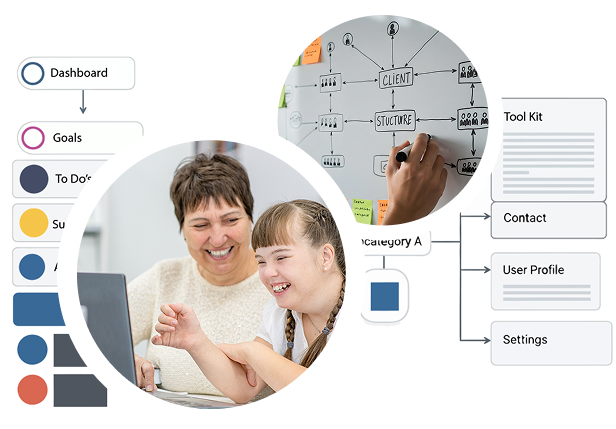
The engagement covered four interconnected workstreams:
1. Goal-Setting & Personalization Engine
We designed a guided goal-setting flow that helps clients articulate a holistic vision for their lives — spanning employment, housing, social connection, and independence. Goals are structured to be specific, trackable, and linkable to available services. Case managers participate in this process through a collaborative portal, approving goals and matching them to the appropriate service tier and vendor.
2. Service Directory & Vendor Management
Cadence includes a robust, searchable service directory built around the real vocabulary of service organizations. We designed a vendor database architecture that allows organizations to maintain their approved vendor roster, while clients and case managers use profile-aware search to find the right match for each goal. Vendor data is surfaced contextually — not buried in admin settings.
3. Real-Time Outcome Measurement (Person Centered Measures™)
This was the core design and engineering challenge. We worked with Tempo to develop a proprietary set of Person Centered Measures™ — a provisionally patented outcome framework that covers dozens of standardized metrics across employment readiness, service satisfaction, informed choice, and service-type impact. Reporting surfaces are designed to give organizations an accurate, real-time picture of whether services are actually moving the needle for individual clients and across populations.
4. Learning Management & Vendor Compliance
Cadence includes a full training and certification module. Organizations can upload existing training content or create new materials, set requirements for staff and vendors, and track completion — including renewals — automatically. We designed the system so that as service specifications evolve, updated training can be pushed directly through vendor portals, addressing the high-turnover reality of frontline social services work.
Creating a Feedback Loop to Measure Outcomes
To measure outcomes we designed a service feedback loop and configurable algorithms to track specific metrics.
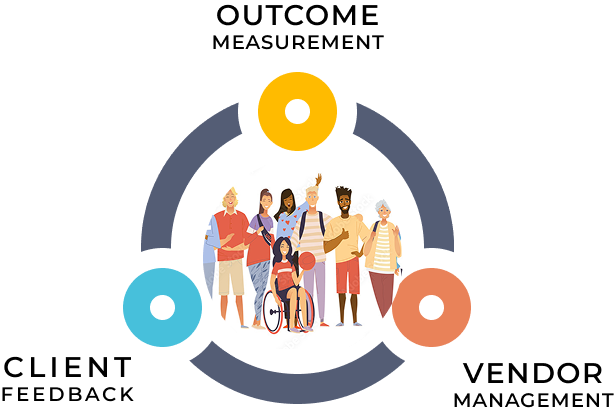
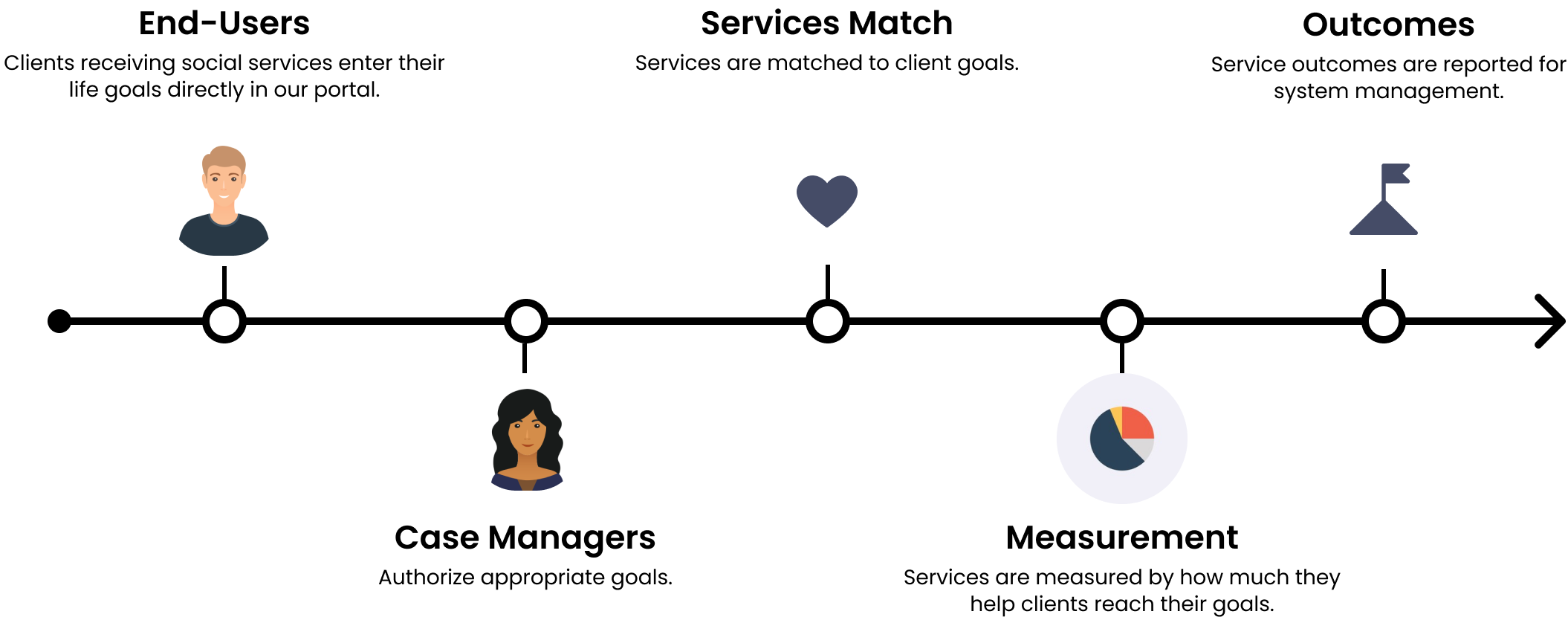
A unified platform for every stakeholder in the service cycle
Supporting distinct role based portal experiences — all operating on the same real-time data backbone.
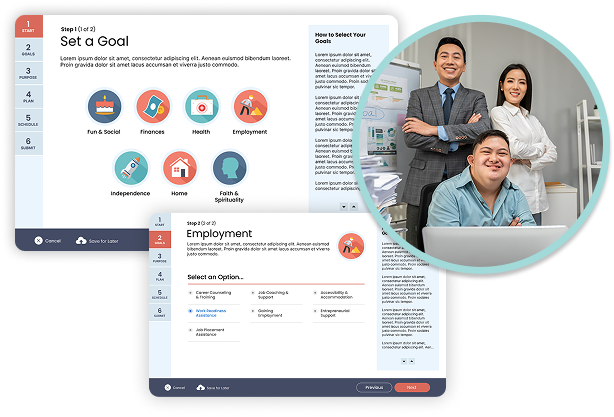
Giving Clients a Voice
Social services clients strongly rely on vendor programs to achieve important life objectives. Whether learning to swim, finding employment, or simply being more independent, these tasks require vendor accountability and outcomes measurement to ensure success. Allowing end-clients to define their own goals online, then:
Allows clients and their caregivers to select desired outcomes
Allows case managers to effectively match vendor services with client goals
Configurable to your needs
Tracks outcomes individually and collectively.
Tradeshow & demo Support
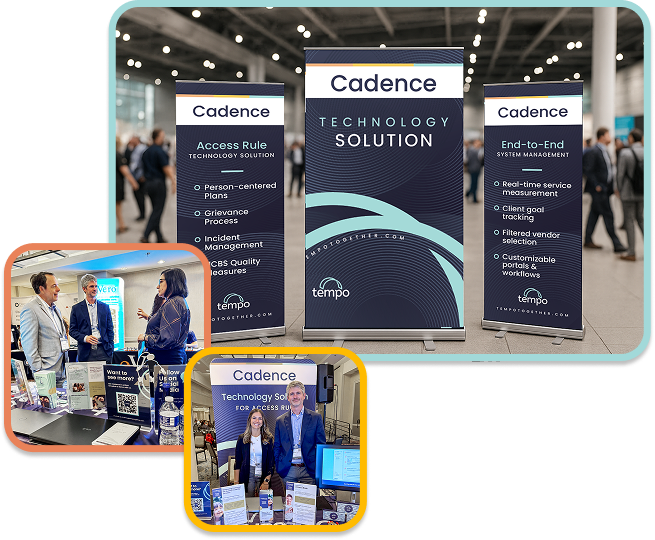
After six months of intense product development, the Cadence app was ready for public demo. Because of our inherent workflow and technical knowledge, the client invited us to lead in-person sales demos at several industry conferences. Coupled with Tempo’s industry expertise, we formed a powerful team that showed attendees what the future of social services management looks like. We also managed shipping and logistics of all show signage and materials.
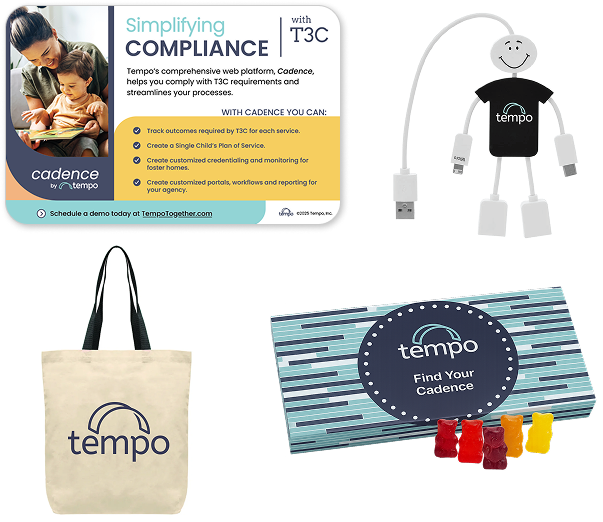
Marketing Collateral
When going to market, there’s never a second chance to make a first impression. Tempo understood they needed a full arsenal of promotional and product information assets to impress and inform potential customers. At M7, we developed a robust suite of assets to ensure success.
Social service organizations face a compounding set of pressures: budgets that don't grow with demand, a patchwork of disconnected tools for case management and service tracking, and increasing regulatory expectations around outcome accountability. The result is that the people who most need help — those receiving disability, elderly care, and community support services — often get lost in administrative overhead.
A platform that changes what accountability looks like in social services
Cadence represents a meaningful shift in how social service organizations can operate — moving from reactive, paper-based case management to a proactive, data-driven model where outcomes are measured as services are delivered, not months later in a program report.